
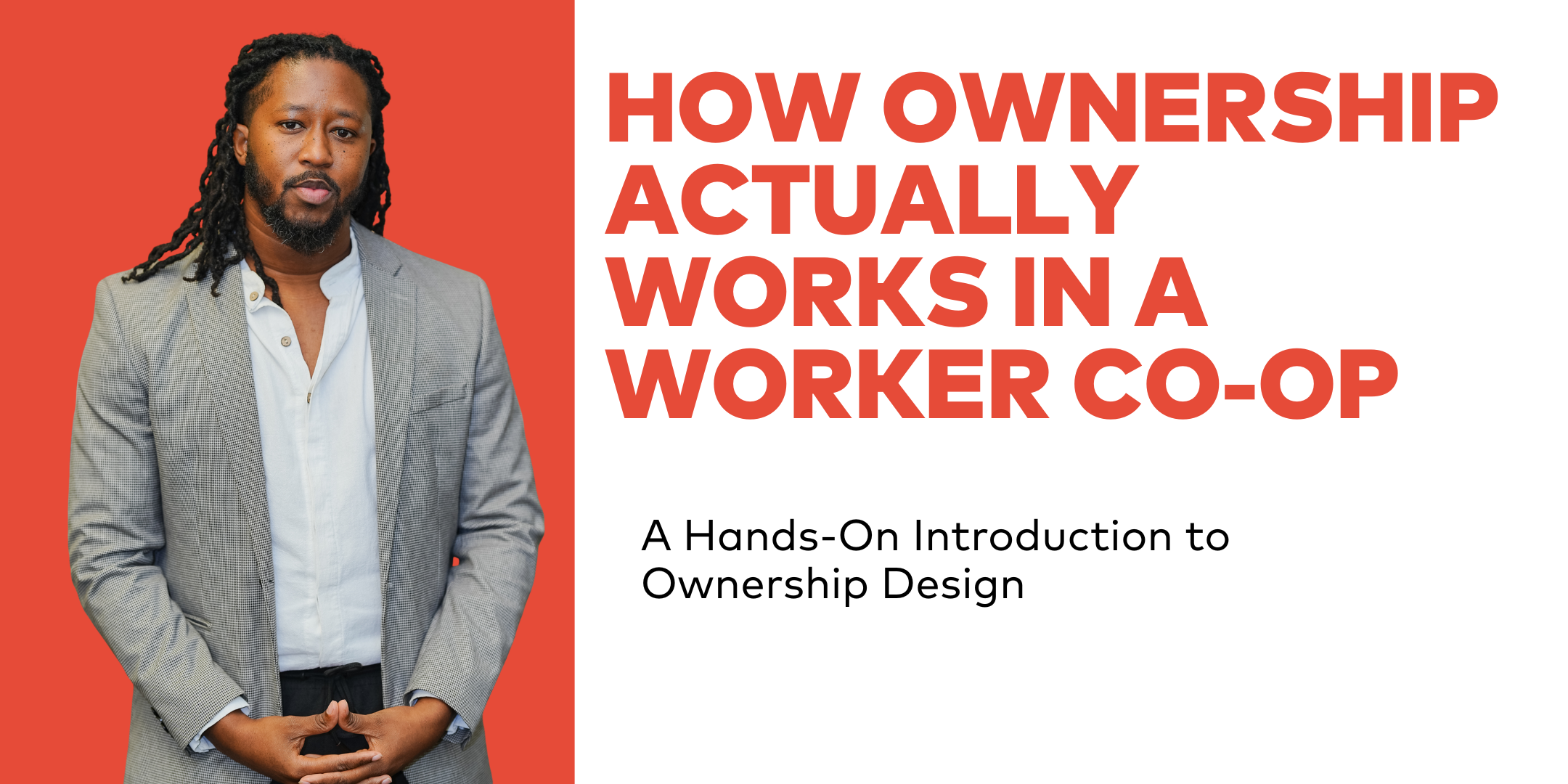
“Ownership doesn’t just happen because you filed paperwork. It’s designed.”
Worker ownership can sound deceptively simple: employees become owners (check!), decisions are shared (check!), wealth stays local (check!). But the reality is, successful worker cooperatives don’t emerge from paperwork or ritual alone. They are intentionally designed — shaped through hard governance choices, financial insecurity, and assumed shared expectations.
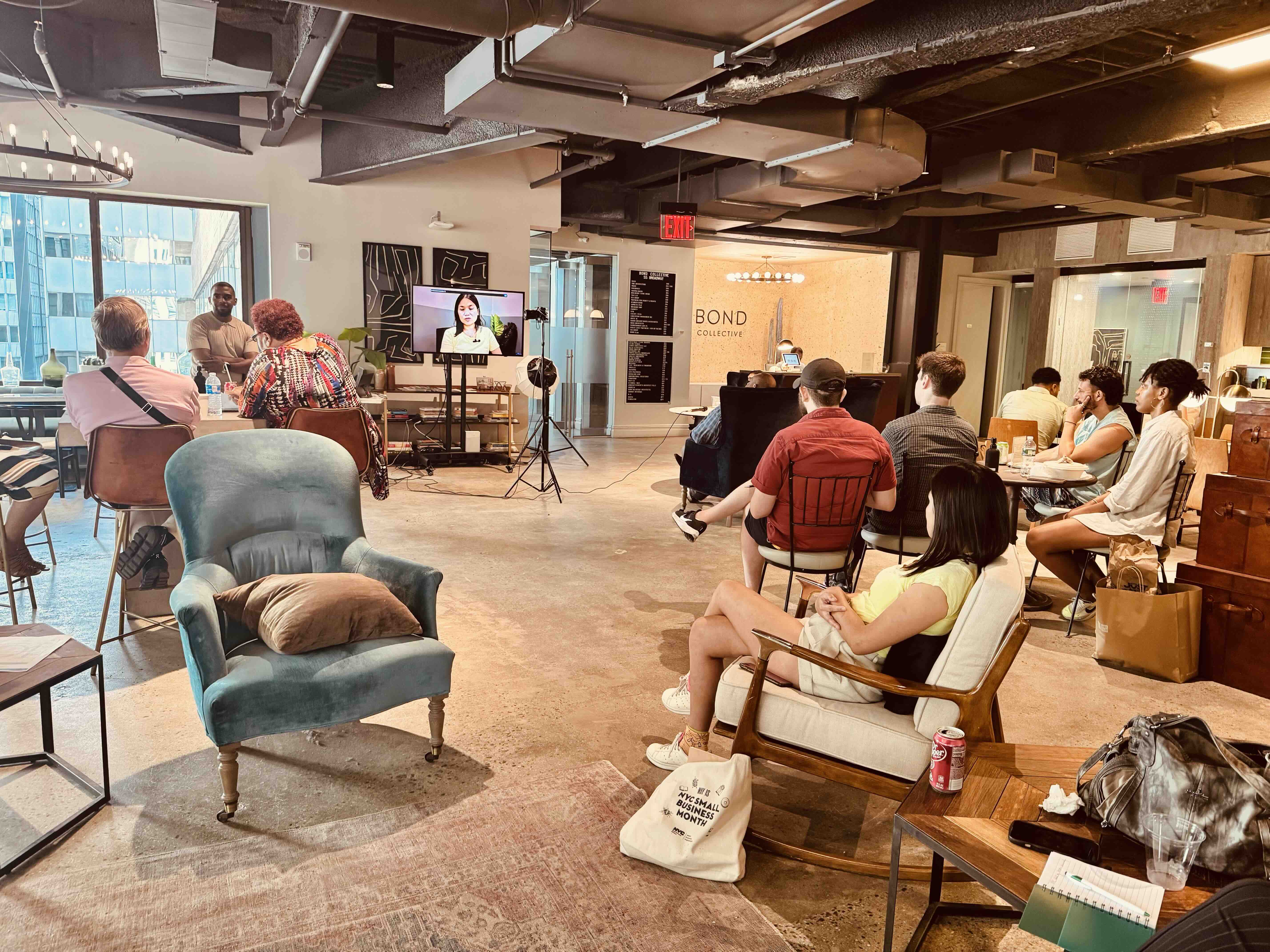
During a recent LevelUp Coops session facilitated by Johan Mathews, cooperative leaders explored what ownership actually looks like in day-to-day operations. The conversation revealed a reality often missing from surface-level descriptions: ownership is not a status. It is a system.
Ownership doesn’t happen automatically
Forming a cooperative does not guarantee meaningful ownership. Without clear rules, processes, and education, decision-making can become unclear or concentrated — undermining the very purpose of the model. It is easier to fall back on learned behaviors from your corporate experience, or because you’re an alpha already. It takes effort, discipline, and intentionality to overcome this.
Participants emphasized that ownership must be deliberately structured:
- Who can become a member?
- How are major decisions made?
- What rights come with ownership (on the first day!) — and what responsibilities?
- How is capital built and distributed?
These choices shape whether a co-op functions as a democratic workplace or simply adopts the label.
Every benefit comes with responsibility
Worker ownership expands rights — voice in governance, access to profits, long-term wealth building. But those benefits carry obligations: participation, financial literacy, accountability to peers, and stewardship of the enterprise.
In practice, strong co-ops invest heavily in member education and leadership development. Ownership is not passive; it requires active engagement to work well.
Stakeholders extend beyond the membership
Designing ownership also means recognizing the broader ecosystem around the business, which means identifying who the other stakeholders are outside of ownership. Successful cooperatives consider how their structure interacts with:
- Advisors and technical assistance providers
- Lenders and capital partners
- Community stakeholders
- Future employees
- Retiring founders
Ignoring these relationships can create bottlenecks later — especially during growth or leadership transitions.
Learning from experience matters
One of the most valuable parts of the session was retrospective reflection: What worked? What would we change? What surprised us?
These insights highlight a core truth: ownership design is iterative. Even mature cooperatives revisit governance structures, compensation systems, and membership rules as conditions change.
A tool, not a template
There is no single “correct” co-op design. The goal is alignment between structure and purpose. Governance tools are instruments to help groups make intentional choices — not templates to copy blindly.
For business owners considering employee ownership, this distinction is crucial. Converting to a worker cooperative is not simply a transaction; it is an organizational transformation.
Ownership works best when it is thoughtfully built, continuously maintained, and shared by people prepared to exercise it.
👉 Learn more about ICA’s training and technical assistance programs for businesses exploring employee ownership.
Interview multiple candidates
Lorem ipsum dolor sit amet, consectetur adipiscing elit proin mi pellentesque lorem turpis feugiat non sed sed sed aliquam lectus sodales gravida turpis maassa odio faucibus accumsan turpis nulla tellus purus ut cursus lorem in pellentesque risus turpis eget quam eu nunc sed diam.
Search for the right experience
Lorem ipsum dolor sit amet, consectetur adipiscing elit proin mi pellentesque lorem turpis feugiat non sed sed sed aliquam lectus sodales gravida turpis maassa odio.
- Lorem ipsum dolor sit amet, consectetur adipiscing elit.
- Porttitor nibh est vulputate vitae sem vitae.
- Netus vestibulum dignissim scelerisque vitae.
- Amet tellus nisl risus lorem vulputate velit eget.
Ask for past work examples & results
Lorem ipsum dolor sit amet, consectetur adipiscing elit consectetur in proin mattis enim posuere maecenas non magna mauris, feugiat montes, porttitor eget nulla id id.
- Lorem ipsum dolor sit amet, consectetur adipiscing elit.
- Netus vestibulum dignissim scelerisque vitae.
- Porttitor nibh est vulputate vitae sem vitae.
- Amet tellus nisl risus lorem vulputate velit eget.
Vet candidates & ask for past references before hiring
Lorem ipsum dolor sit amet, consectetur adipiscing elit ut suspendisse convallis enim tincidunt nunc condimentum facilisi accumsan tempor donec dolor malesuada vestibulum in sed sed morbi accumsan tristique turpis vivamus non velit euismod.
“Lorem ipsum dolor sit amet, consectetur adipiscing elit nunc gravida purus urna, ipsum eu morbi in enim”
Once you hire them, give them access for all tools & resources for success
Lorem ipsum dolor sit amet, consectetur adipiscing elit ut suspendisse convallis enim tincidunt nunc condimentum facilisi accumsan tempor donec dolor malesuada vestibulum in sed sed morbi accumsan tristique turpis vivamus non velit euismod.

Joél Mejia
Business Developer
.jpg)
.png)

