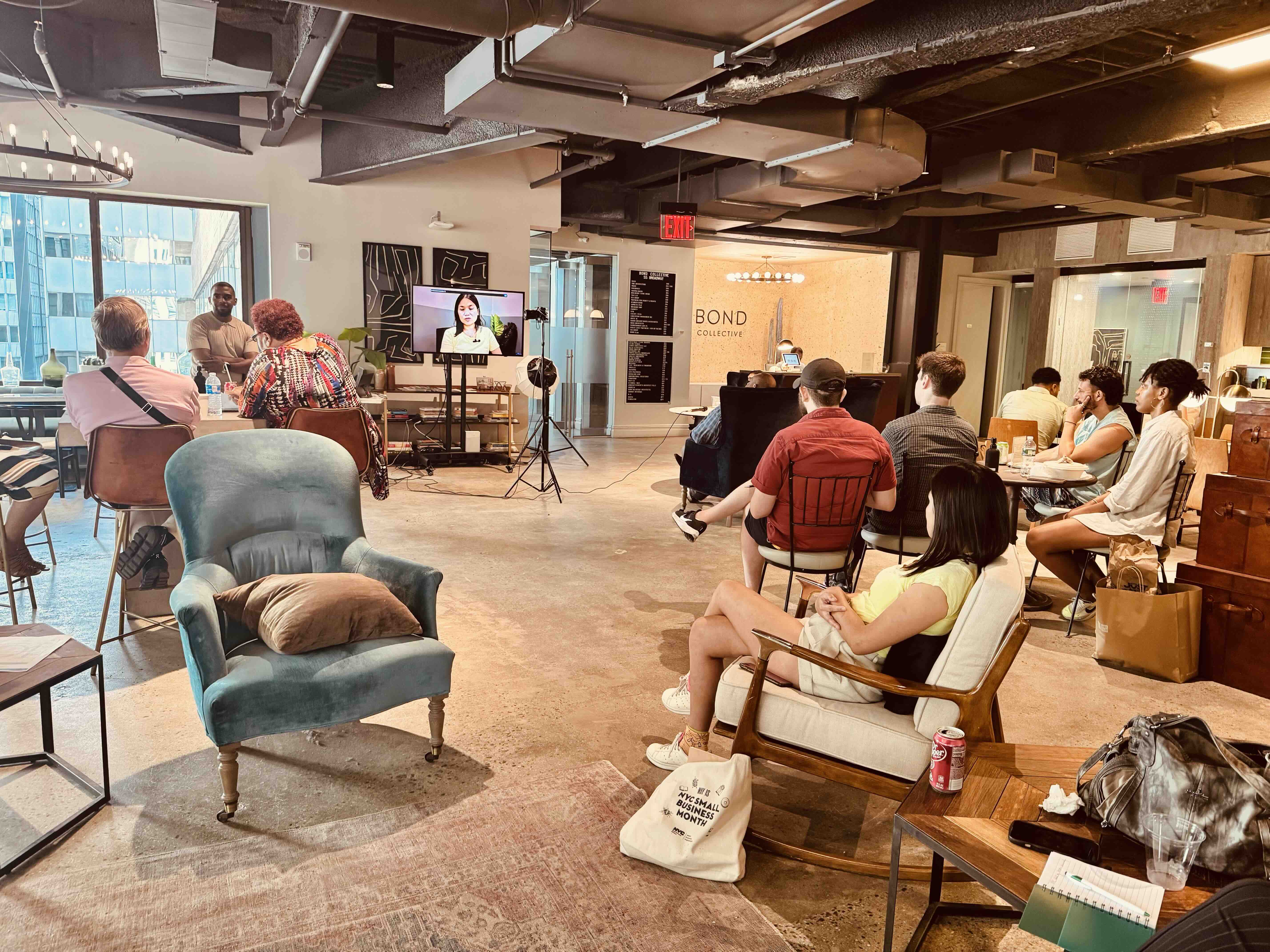
From Worker Ownership to Worker Power: Why Cooperative Ecosystems Matter
While the city was thawing out after a bitter cold, momentum could be felt on the road towards a more inclusive economy anchored by worker-owned businesses. In the days leading up to New York City’s 2026 Onboarding to the Cooperative Community, two businesses reached important milestones on different paths to worker ownership.

When Taryn Crosby founded MCM Collaborative in 2019, she began with a vision for a different kind of therapy practice—one grounded in culturally responsive, gender-affirming care for LGBTQIA+ New Yorkers, people of color, and people living at the intersections of those identities.
Over time, MCM grew from a solo practice into a collaborative team of clinicians. As it grew, shared ownership began to feel like a natural extension of its mission and culture.
After more than a year of planning with the ICA Group through New York City’s Worker Cooperative Business Development Initiative (WCBDI), Taryn sold MCM Collaborative to its employees. The transition became official during Pride Month, just days before the June 25 event.
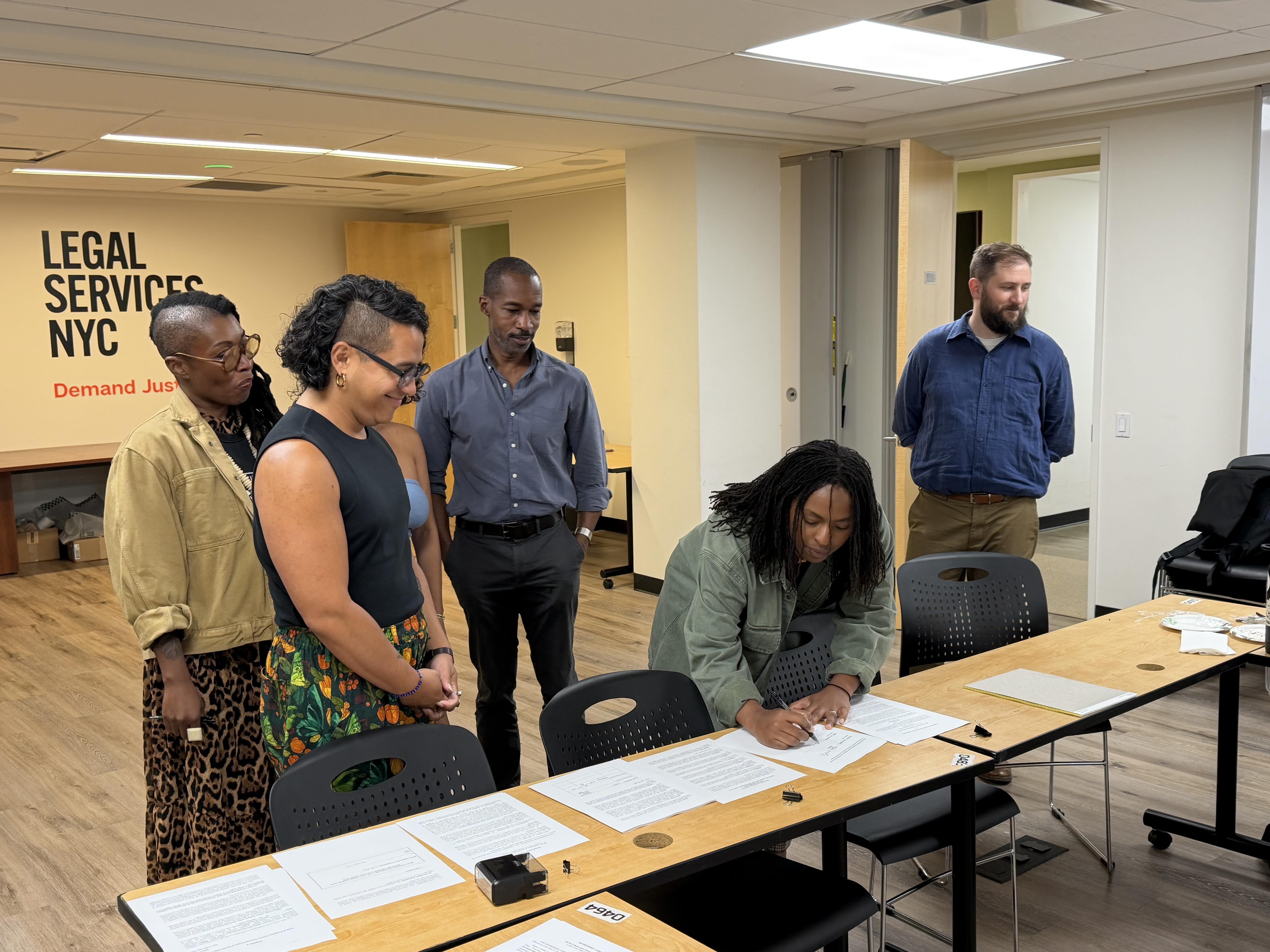
In a recent feature on the worker-owned news website, Hell Gate NYC, Taryn said that becoming a cooperative is an “opportunity to still be able to control your own caseload and be able to decide your own hours, but do it in a group where we are sharing resources.”

Around the same time, another group of worker-owners was preparing to launch Lengua Común, a new cooperative made up of seasoned language justice advocates supporting organizations with English-Spanish interpretation, translation, and language justice consulting services.
Grounded in the lived experiences of Latin American migrant and working-class communities, Lengua Común was created to be more than a transactional language-services vendor. Its members envision the cooperative as a two-way bridge: connecting organizations and small businesses with culturally informed bilingual services while helping community-based organizations and public entities expand meaningful access and participation.
Not all of the numerous Spanish-speaking communities that live in New York City get to experience the rich civic and cultural experiences available all across the city. Through professional language services, organizational capacity building, participatory research, and event support, Lengua Común aims to help Spanish-speaking communities participate more fully in New York City’s civic, cultural, and economic life.
Its cooperative structure is central to that mission. By prioritizing fair compensation, sustainable workloads, shared governance, and long-term skill development, Lengua Común is working to build both better language access and better working conditions.
Again, the ICA Group was able to provide key support in establishing systems for their priorities, supporting the governance development process, and
MCM Collaborative and Lengua Común highlight how entrepreneurs can arrive at worker ownership through different routes. Yet, they both needed ecosystem support to get to the finish line, which is truly only the beginning.
Together, their stories provided a fitting backdrop for the June gathering. As New York City welcomed a new generation of worker-owners, these businesses demonstrated what becomes possible when people have access to the specialized knowledge, relationships, and resources needed to put cooperative values into practice.
Ownership Is a Beginning, Not an Endpoint
A business becomes worker-owned through changes to its legal and financial structure. Becoming a successful worker cooperative, however, requires much more.
Worker-owners must learn how to exercise their rights, fulfill the responsibilities of ownership, make decisions together, and participate in the long-term stewardship of their businesses. They need relationships with other cooperators and access to organizations that can provide legal guidance, financing, training, advocacy, and ongoing business assistance.
That is true whether workers are forming a new cooperative like Lengua Común or transitioning an existing company like MCM Collaborative.
Cooperative development cannot end when a business launches or completes its ownership transition. New worker-owners need opportunities to develop the knowledge, confidence, and relationships required to move from holding an ownership stake to exercising real worker power.
Onboarding to the NYC Cooperative Community was designed to support that process.
Welcoming New Worker-Owners into a Movement
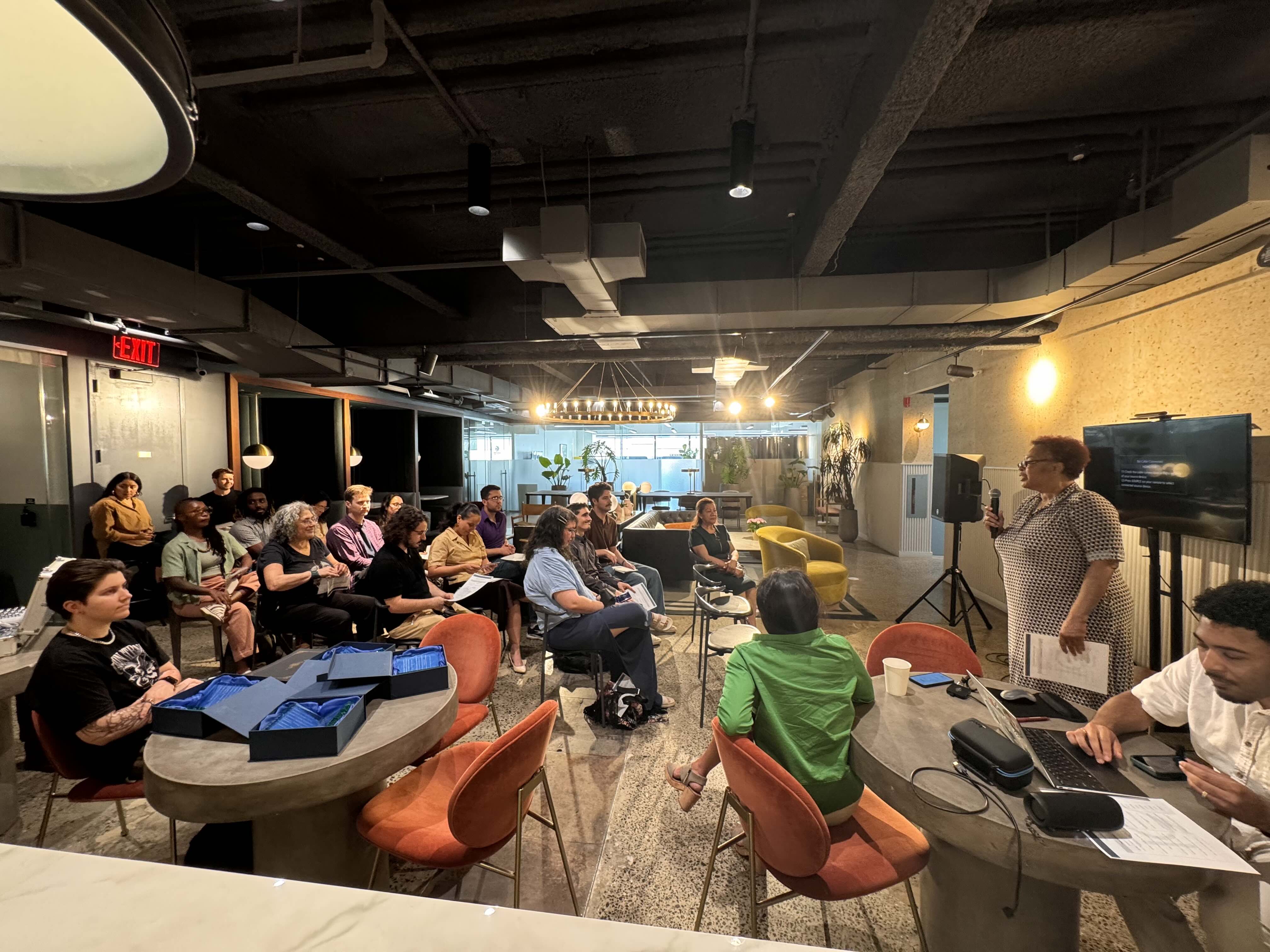
On the warm afternoon of June 25th, new worker-owners, cooperative leaders, technical-assistance providers, and movement partners gathered at the offices of the ICA Group for an afternoon of education, relationship-building, and most importantly, celebration.
The event introduced some attendees to the people and organizations that sustain New York City’s cooperative economy. The program included presentations from movement partners, information about legal and financial resources, new cooperative spotlights, and an induction ceremony recognizing new worker-owners.

But the gathering was about more than orienting people to a collection of services (Principle 5 of the 7 coop principles). It helped participants understand that they were joining a broader movement for economic democracy, enhancing the communities conviviality that happens when people meet face to face for the first time.
Worker-owners may spend most of their time focused on the immediate needs of their own businesses. Gathering with other cooperators allows them to see their work as part of something larger—a community with shared values, a common history, and a collective future.
Putting Cooperative Principles into Practice
The event was organized around three internationally recognized cooperative principles:
- Education, Training and Information
- Cooperation Among Cooperatives
- Concern for Community
These principles are not simply statements of belief. They describe some of the practices that enable a cooperative economy to grow.
Education helps worker-owners understand the opportunities and responsibilities that come with ownership. Cooperation among cooperatives creates networks through which businesses can exchange knowledge, form commercial relationships, and respond to common challenges. Concern for community connects individual businesses to a broader vision for equitable and democratic economic development.
Throughout the program, participants explored the rights and responsibilities of worker-owners and learned about the organizations serving New York City’s cooperative community. Cooperative leaders and movement partners discussed membership networks, civic engagement, solidarity across the cooperative economy, and opportunities for continued learning and leadership development.
Participants were also introduced to providers offering legal assistance, financing, individualized business support, and guidance for cooperative startups and businesses transitioning to employee ownership.
Together, these resources illustrated what a functioning cooperative ecosystem looks like: not one organization attempting to meet every need, but an interconnected network contributing different forms of expertise and support.
Making the Ecosystem Easier to Navigate
New York City has developed a substantial network of organizations supporting worker ownership. Yet the value of that network depends partly on whether cooperatives and worker-owners can find and use it.
For someone entering the field, the ecosystem can be difficult to navigate. Legal support, financing, membership services, technical assistance, advocacy, and leadership development may all be provided by different organizations. New cooperators may not know which resources exist or where to bring a particular question.
Onboarding events help make this infrastructure visible.
Participants connected with cooperative membership organizations, legal and technical-assistance providers, financing partners, business developers, and community-based organizations. They learned not only that resources exist, but how different organizations contribute to the cooperative development process.
These relationships matter. A support system is most effective when people understand how its different parts connect—and when they feel comfortable asking for help before a challenge becomes a crisis.
Relationship-building is not separate from cooperative economic development. It is part of the infrastructure that makes development possible.
What WCBDI Makes Possible
Created by the New York City Council and administered by the Department of Small Business Services, WCBDI supports organizations working to develop and strengthen worker cooperatives across the city.
Through the initiative, cooperatives and groups exploring worker ownership can receive specialized support that may include:
- Cooperative education and leadership development
- Business planning and financial analysis
- Legal guidance
- Access to appropriate financing
- Governance and management development
- Assistance for cooperative startups
- Support for businesses transitioning to employee ownership
- Connections to membership, advocacy, and peer networks
MCM Collaborative and Lengua Común illustrate the range of businesses this infrastructure can support.
For MCM, ICA helped assess the financial and operational feasibility of an employee ownership transition, secure financing, educate employees about cooperative ownership, and develop new governance and management structures. Brooklyn Legal Services provided pro bono legal assistance and prepared the documents required to complete the transaction.
For a startup like Lengua Común, cooperative development includes shaping a viable business model, identifying the market, clarifying the cooperative’s mission and services, and building systems for shared governance, fair compensation, and sustainable operations from the outset.
These forms of assistance do more than help businesses reach a launch or closing date. They build the capacity those businesses need to succeed under worker ownership.
Across the broader ecosystem, WCBDI develops experienced practitioners, strengthens collaboration among support organizations, retains knowledge within the field, and creates accessible entry points for new worker-owners.
The result is durable economic infrastructure.
Public Investment Can Build Lasting Capacity
WCBDI helps make cooperative development accessible to people and communities that may otherwise face barriers to specialized business, financial, and legal assistance.
Rather than treating cooperative development as a series of isolated projects, the initiative invests in a network. That network can respond to different needs at different stages—from workers developing a cooperative startup to an established business preparing to transition to employee ownership.
This capacity becomes especially important during periods of economic uncertainty. Worker-owned businesses, like all small businesses, must contend with rising costs, changing markets, workforce challenges, and uneven access to capital. A developed support ecosystem helps cooperatives respond to these conditions while preserving the values that distinguish them.
Public investment in this work benefits individual businesses, but its effects reach further. It preserves jobs, develops worker leadership, expands access to business ownership, strengthens language and service access, and keeps economic decision-making rooted in New York City communities.
Building the Conditions for Cooperation
Worker cooperatives are often discussed as individual businesses. Their success, however, is closely connected to the conditions surrounding them.
They need informed worker-owners. They need appropriate capital and legal structures. They need knowledgeable advisers, membership organizations, public partners, and opportunities to learn from one another. They need spaces where new cooperators are welcomed and relationships can grow across businesses and industries.
Onboarding to the NYC Cooperative Community brought those elements together in one room.
As interest in worker ownership continues to grow, investing in this connective infrastructure will remain essential. Creating more cooperatives is only one measure of progress. We must also build the knowledge, relationships, and institutions that allow worker-owners to lead those businesses, support one another, and exercise meaningful economic power.
MCM Collaborative and Lengua Común show two ways a worker-owned business can take shape. WCBDI demonstrates why neither path should have to be traveled alone.
When worker ownership is treated not as a collection of isolated experiments, but as an economic-development strategy worthy of sustained public investment, individual business milestones can become part of something larger: a stronger, more equitable, and more democratic local economy.
[Learn more about WCBDI and New York City’s worker cooperative community →]
Interview multiple candidates
Lorem ipsum dolor sit amet, consectetur adipiscing elit proin mi pellentesque lorem turpis feugiat non sed sed sed aliquam lectus sodales gravida turpis maassa odio faucibus accumsan turpis nulla tellus purus ut cursus lorem in pellentesque risus turpis eget quam eu nunc sed diam.
Search for the right experience
Lorem ipsum dolor sit amet, consectetur adipiscing elit proin mi pellentesque lorem turpis feugiat non sed sed sed aliquam lectus sodales gravida turpis maassa odio.
- Lorem ipsum dolor sit amet, consectetur adipiscing elit.
- Porttitor nibh est vulputate vitae sem vitae.
- Netus vestibulum dignissim scelerisque vitae.
- Amet tellus nisl risus lorem vulputate velit eget.
Ask for past work examples & results
Lorem ipsum dolor sit amet, consectetur adipiscing elit consectetur in proin mattis enim posuere maecenas non magna mauris, feugiat montes, porttitor eget nulla id id.
- Lorem ipsum dolor sit amet, consectetur adipiscing elit.
- Netus vestibulum dignissim scelerisque vitae.
- Porttitor nibh est vulputate vitae sem vitae.
- Amet tellus nisl risus lorem vulputate velit eget.
Vet candidates & ask for past references before hiring
Lorem ipsum dolor sit amet, consectetur adipiscing elit ut suspendisse convallis enim tincidunt nunc condimentum facilisi accumsan tempor donec dolor malesuada vestibulum in sed sed morbi accumsan tristique turpis vivamus non velit euismod.
“Lorem ipsum dolor sit amet, consectetur adipiscing elit nunc gravida purus urna, ipsum eu morbi in enim”
Once you hire them, give them access for all tools & resources for success
Lorem ipsum dolor sit amet, consectetur adipiscing elit ut suspendisse convallis enim tincidunt nunc condimentum facilisi accumsan tempor donec dolor malesuada vestibulum in sed sed morbi accumsan tristique turpis vivamus non velit euismod.

Joél Mejia
Business Developer
.jpg)